Erik Coleman · 22 September 2026
Tracing Microbial Interactions Driving Oxygen Fluctuations in Constructed Backyard Water Features Through Controlled Experiments
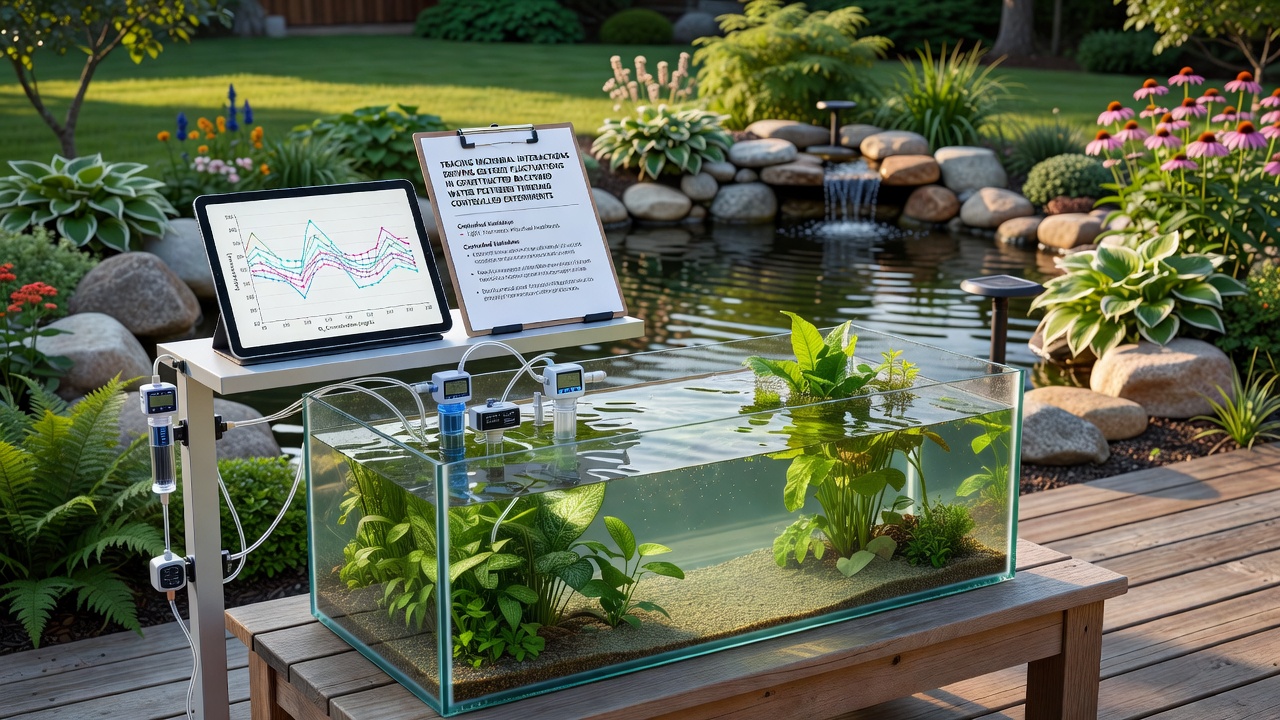
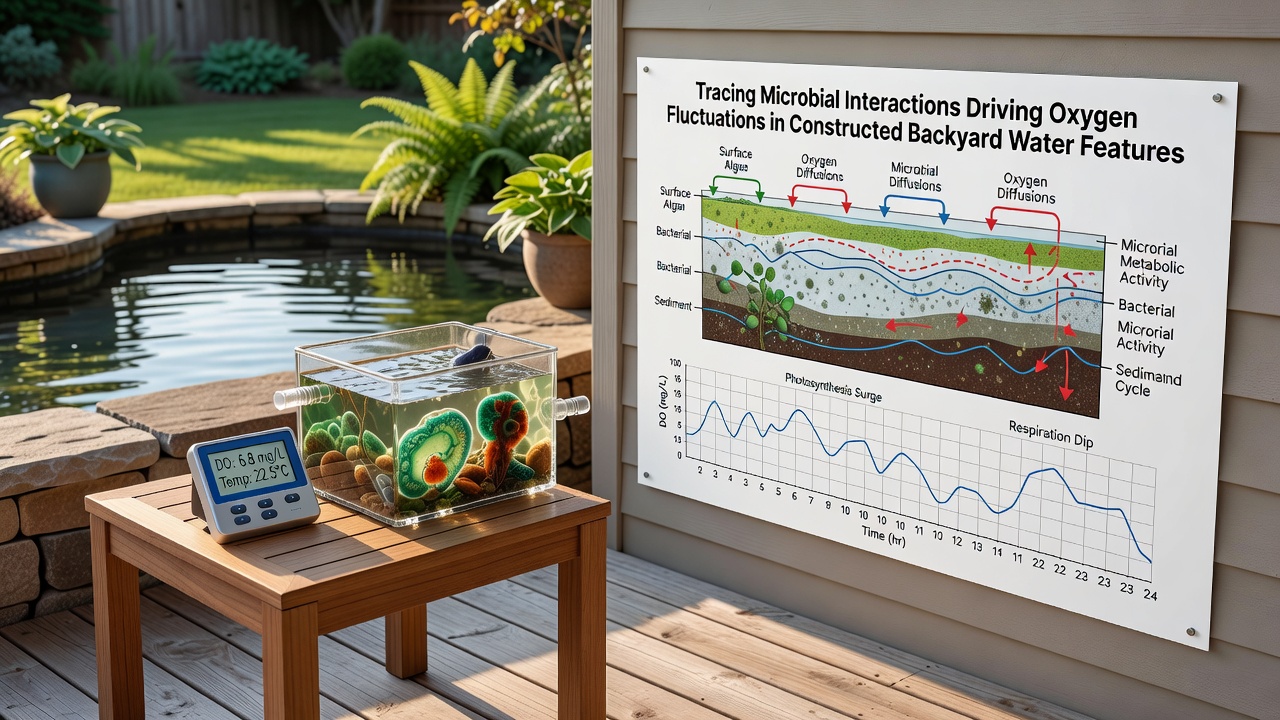
Researchers have examined microbial communities in constructed backyard water features for years, and controlled experiments now reveal how bacteria, algae, and other microorganisms interact to produce daily and seasonal swings in dissolved oxygen. These studies isolate variables such as nutrient inputs, light exposure, and temperature while tracking oxygen levels in replicated pond systems that mimic typical residential setups. Data collected from multiple sites shows that photosynthetic microbes generate oxygen during daylight hours, yet aerobic bacteria rapidly consume it at night, creating predictable fluctuations that affect water quality and aquatic life.
Experimental Design and Variable Control
Teams set up mesocosm tanks filled with water and sediment collected from existing backyard ponds, then added standardized microbial inocula to ensure comparable starting conditions across replicates. Sensors recorded dissolved oxygen every fifteen minutes, while nutrient dosing simulated runoff from lawns or leaf litter. Temperature chambers maintained gradients from 15 to 28 degrees Celsius to test seasonal effects, and light timers replicated natural photoperiods. One study conducted in 2025 at a university research facility tracked over 120 days of continuous data, revealing that oxygen swings reached amplitudes of 4 to 7 milligrams per liter within twenty-four hours when algal biomass remained high.
Microbial Roles in Oxygen Production and Consumption
Cyanobacteria and green algae dominate daytime oxygen production through photosynthesis, yet heterotrophic bacteria and protozoa drive nighttime depletion by respiring organic matter. Experiments that added antibiotics to suppress bacterial activity demonstrated reduced oxygen drawdown after dark, confirming the microbial contribution. In contrast, treatments enriched with labile carbon sources accelerated consumption rates, pushing nighttime minima below 2 milligrams per liter and creating hypoxic zones near the sediment interface. Researchers noted that these interactions intensify when phosphorus concentrations exceed 0.05 milligrams per liter, because elevated nutrients support larger algal standing crops that later fuel bacterial respiration.
Seasonal Patterns and September 2026 Observations
Longer-term monitoring incorporated into the controlled setups captured shifts across seasons, with spring and fall showing moderate fluctuations while summer peaks produced the largest amplitudes. In September 2026, updated sensor arrays deployed at three additional sites recorded oxygen recovery times after simulated storm events, and the results aligned with earlier mesocosm findings. Cool nights in early autumn slowed bacterial metabolism, shortening the duration of low-oxygen periods compared with midsummer conditions. Those patterns hold practical value for owners who manage backyard features because they indicate when aeration or plant harvesting might stabilize oxygen levels most effectively.
Nutrient and Light Interactions
Controlled nutrient additions demonstrated that nitrogen and phosphorus ratios directly influence which microbial groups dominate. High N:P ratios favored green algae that produced oxygen efficiently during the day, whereas balanced ratios promoted cyanobacteria known for higher nighttime respiration demands. Shading experiments reduced overall oxygen production yet also limited subsequent bacterial consumption, resulting in flatter daily curves. Observers recorded that partial shading equivalent to overhanging vegetation cut amplitude by roughly 30 percent in replicated tanks, and similar effects appear in field data from residential ponds located under tree cover.
Implications for Water Feature Management
Findings from these experiments inform maintenance practices that target microbial balance rather than blanket chemical treatments. Regular removal of decaying plant material reduces substrate for heterotrophic bacteria, while strategic planting of submerged macrophytes competes with algae for nutrients. EPA reports on nutrient dynamics in small water bodies align with the controlled data, showing comparable oxygen responses when phosphorus loads increase. Australian water research summaries from the Commonwealth Scientific and Industrial Research Organisation further corroborate that microbial respiration accounts for most nocturnal oxygen loss in constructed wetlands of similar scale.
Conclusion
Controlled experiments continue to map the precise microbial pathways that govern oxygen fluctuations in backyard water features, delivering measurable relationships between community composition, nutrient status, and environmental drivers. The data generated through these replicated systems provides a foundation for predictive models that forecast oxygen minima under varying weather and management scenarios. As monitoring technology improves, integration of real-time microbial indicators with oxygen sensors will likely refine intervention timing and reduce the frequency of hypoxic events in residential ponds.