Otto Lange · 8 September 2026
Seasonal Nutrient Cycling Patterns in Managed Water Bodies: Data from Long-Term Field Observations
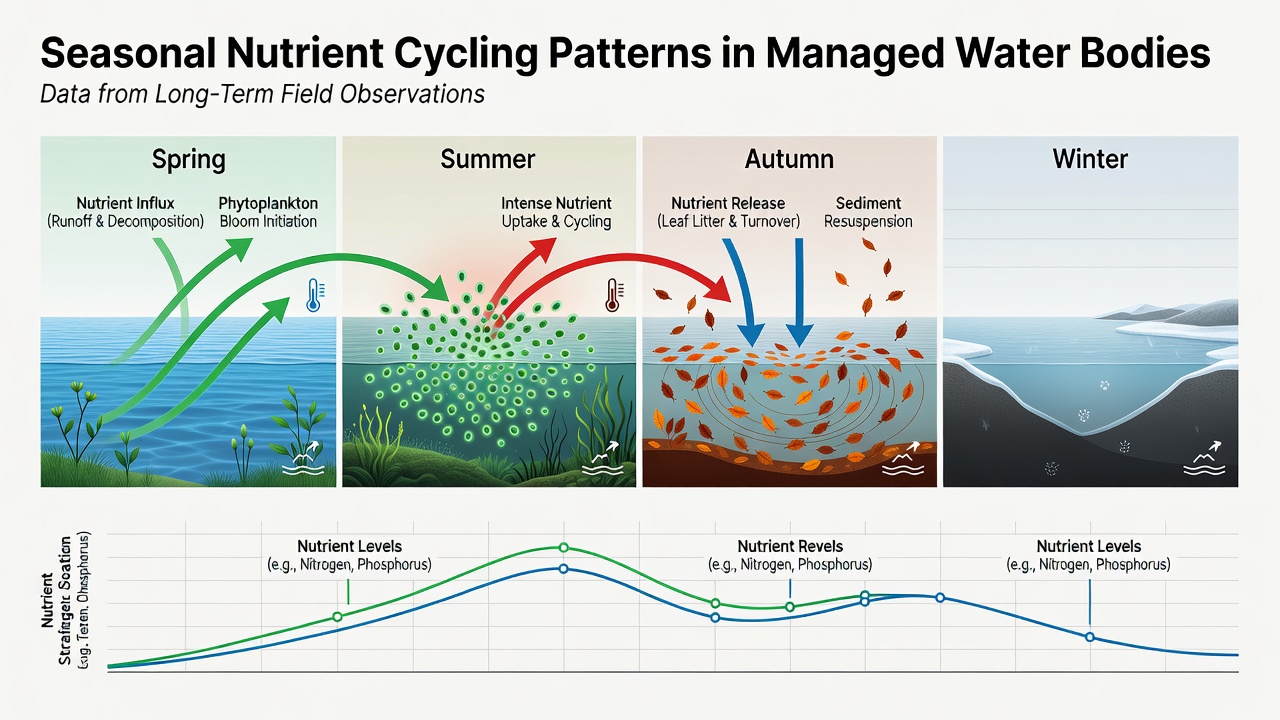
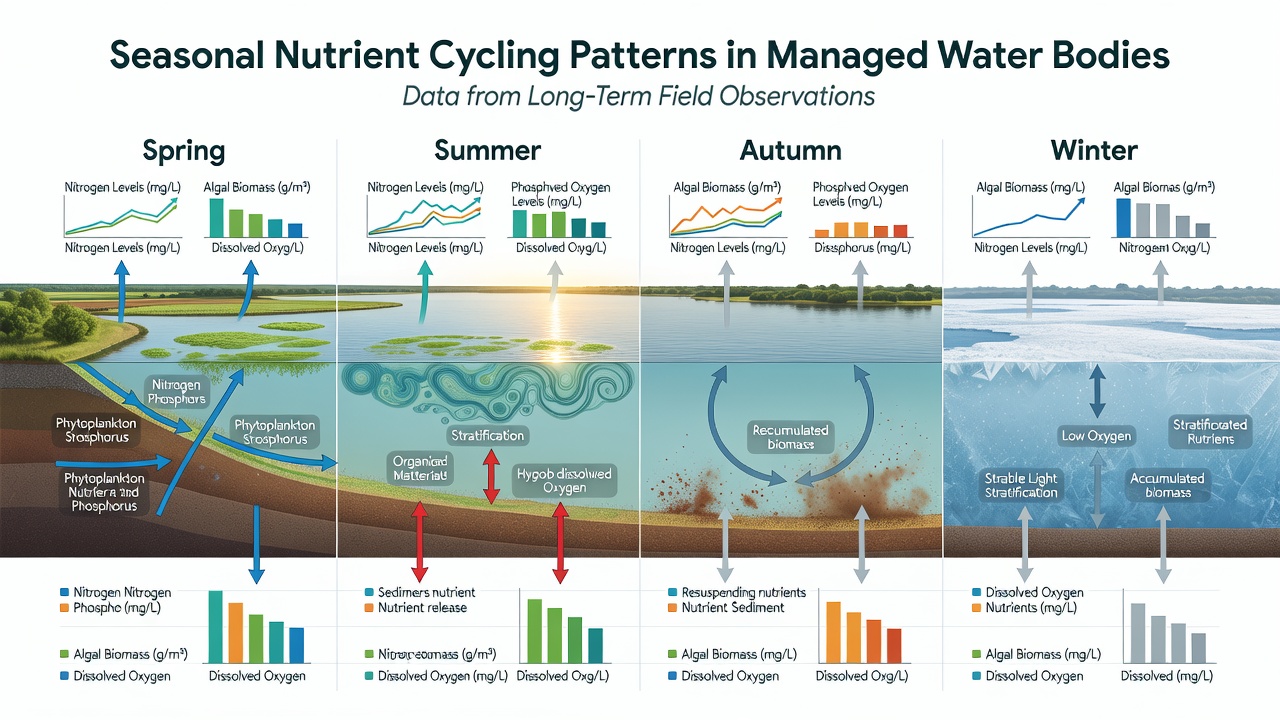
Researchers have tracked nutrient cycling in managed water bodies for decades through systematic field observations that span multiple seasons and years. These studies focus on nitrogen and phosphorus transformations because both elements drive primary productivity and influence water quality outcomes across reservoirs, ponds, and constructed wetlands. Data sets from repeated sampling campaigns reveal consistent seasonal shifts that managers can anticipate when they maintain continuous monitoring programs. Spring turnover often releases accumulated nutrients from sediments into the water column as temperatures rise and oxygen levels stabilize near the bottom. Long-term records show phosphorus concentrations frequently peak during this period because anoxic conditions from winter allow iron-bound phosphorus to mobilize. Nitrogen follows a parallel pattern with nitrate reduction giving way to ammonium release, although microbial processes begin converting ammonium to nitrate once aeration improves. Observers note that these releases occur earlier in shallower systems where light penetration warms the entire volume quickly. Summer stratification then separates the water column into layers that limit vertical mixing. Surface waters experience rapid algal uptake of available nutrients while hypolimnetic zones accumulate reduced compounds. Multi-year data indicate that phosphorus remains trapped below the thermocline until fall mixing, whereas nitrogen transformations continue through denitrification in low-oxygen sediments. Managed sites that deploy bottom aeration show reduced phosphorus release compared with unmanaged counterparts, according to records compiled by the U.S. Environmental Protection Agency.Autumn and Winter Transitions
Autumn cooling initiates destratification that redistributes nutrients throughout the water column once again. Field observations collected over twenty-year periods demonstrate that this redistribution fuels brief pulses of primary production before light and temperature decline. Phosphorus that had settled during summer becomes available again, and nitrate concentrations rise as oxygen diffuses downward and supports nitrification. Managers who reduce external loading before this period record lower overall nutrient inventories entering winter.
Winter brings the slowest biological activity in temperate climates, yet sediment-water exchanges persist at reduced rates. Long-term monitoring stations document gradual ammonium accumulation under ice cover when oxygen depletion limits nitrification. Phosphorus release continues slowly in anoxic zones, but cold temperatures slow the kinetics enough that concentrations stabilize rather than spike. European Environment Agency reports compiled from catchments across multiple member states confirm similar winter accumulation patterns in both natural lakes and engineered water bodies.Management Influences on Cycling Rates
Long-term data sets allow separation of natural seasonal signals from management effects. Aeration, dredging, and chemical precipitation each alter the magnitude and timing of nutrient pulses. Sites that apply aluminum salts before spring turnover show suppressed phosphorus release for multiple seasons afterward, while aeration systems maintain higher redox potentials and reduce internal loading year-round. Researchers tracking the same water bodies before and after intervention document measurable declines in summer chlorophyll levels when internal loading decreases.
 External loading from watershed sources interacts with these internal cycles. Data from catchments in Australia indicate that phosphorus entering during storm events in late summer contributes disproportionately to autumn peaks because the receiving water body already holds elevated temperatures that accelerate microbial processing. In contrast, spring inputs tend to be diluted by higher water volumes and incorporated into biomass before they reach sediments. Those who maintain continuous inflow monitoring alongside in-lake sampling gain clearer pictures of how watershed events propagate through seasonal cycles.
Regional Patterns and Data Gaps
Observations from subtropical managed systems reveal compressed seasonal cycles compared with temperate zones. Nutrient release occurs over shorter windows, and stratification can persist for months without strong wind events. Canadian field stations operating in boreal regions record extended winter accumulation phases followed by rapid spring pulses once ice melts. These geographic differences underscore why managers rely on site-specific baselines rather than generic models when they plan interventions.
September 2026 marks the completion of several multi-decade data sets that now allow trend analysis across full solar cycles. Preliminary comparisons show no systematic shift in the timing of spring phosphorus peaks despite warmer average temperatures, although peak concentrations have increased at some eutrophic sites. Continued sampling will clarify whether these changes reflect altered precipitation patterns or changes in watershed land use.
Conclusion
Long-term field observations establish that seasonal nutrient cycling in managed water bodies follows repeatable patterns driven by temperature, oxygen, and stratification. Spring and fall mixing redistribute nutrients while summer stratification isolates layers and winter slows kinetics. Management actions such as aeration and sediment treatment modify the amplitude of these cycles rather than their timing. Data collected through 2026 continue to refine understanding of how external loading and internal processes interact across climates, giving managers evidence-based tools for maintaining water quality. Continued monitoring remains essential because each water body retains unique responses shaped by depth, residence time, and watershed characteristics.