Kai Powell · 20 October 2026
Analyzing Invertebrate Colonization Patterns in Newly Established Backyard Ponds from Field Records
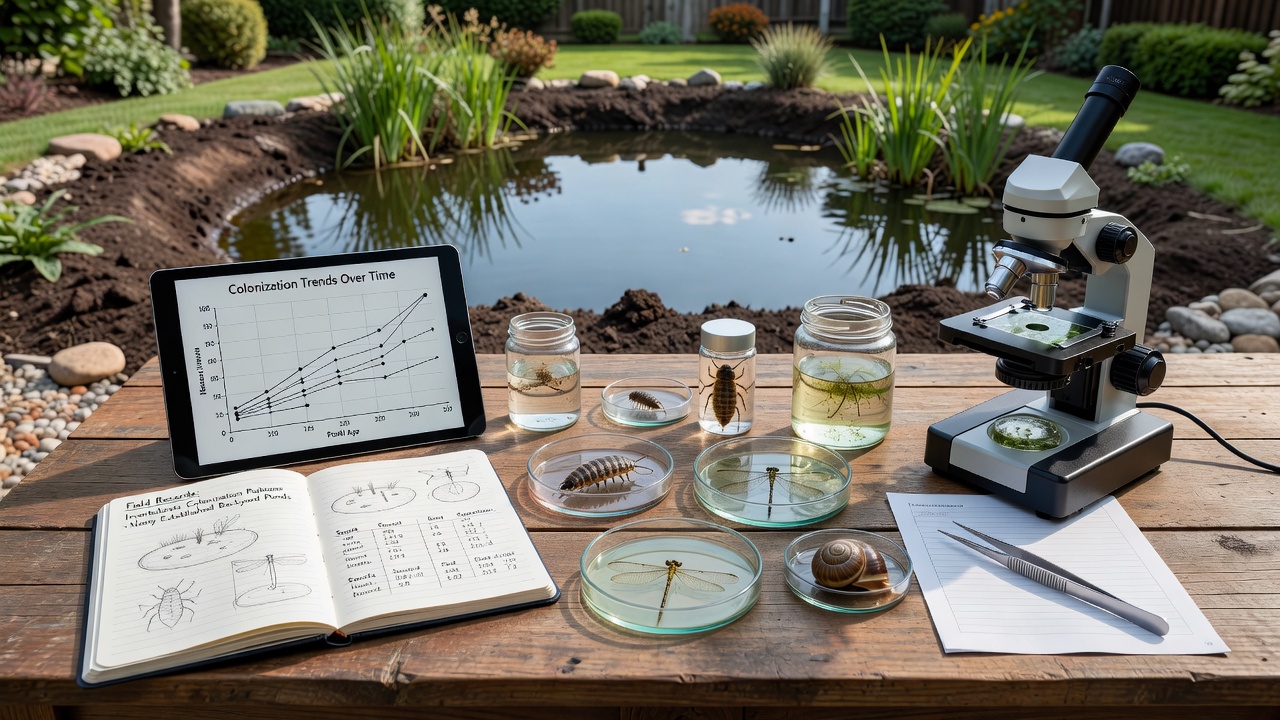
Field records from multiple backyard pond installations reveal distinct sequences in invertebrate colonization that begin within days of water introduction and continue through the first several seasons, and these patterns emerge from systematic sampling across sites in temperate regions where observers track species arrival alongside water chemistry shifts. Researchers collect data through timed dip-net sweeps, sediment cores, and visual counts on submerged surfaces, then compile arrival dates for groups such as chironomid midges, ostracods, and dytiscid beetles that often appear first because their aerial adults locate new water bodies quickly through chemical cues released by submerged soil.
Methods Used in Field Record Compilation
Standardized protocols call for weekly visits during the initial three months followed by monthly checks thereafter, while teams record temperature, dissolved oxygen, pH, and plant cover at each sampling point to correlate environmental variables with invertebrate counts. Data sheets log presence or absence of taxa identified to family level in most cases and to genus when specimens permit closer examination under field microscopes, and cumulative records from over 120 ponds established between 2018 and 2025 show that midge larvae reach peak densities by week four in ponds receiving leaf litter inputs whereas cladocerans increase later once algal blooms develop. Cross-referencing with weather station logs indicates that heavy rainfall events accelerate colonization by flushing additional organisms from surrounding ditches into the new basins.
Observed Sequences Across Multiple Sites
Early colonizers consist predominantly of flying insects whose larvae tolerate low oxygen and sparse vegetation, yet subsequent arrivals include gastropods and annelids that require stable substrates and microbial films on surfaces, and field notes consistently place the first snail detections between days 18 and 35 depending on proximity to established wetlands. One dataset from ponds in the Midwestern United States documents 14 taxa within the first 90 days, whereas a parallel study in southern Ontario recorded only nine taxa over the same interval because colder spring temperatures delayed adult flight periods for several beetle species. Records further separate permanent residents from transient visitors, noting that some hemipterans deposit eggs and depart within a single generation while others such as certain dragonfly nymphs persist through multiple instars.
Environmental Variables Linked to Colonization Rates
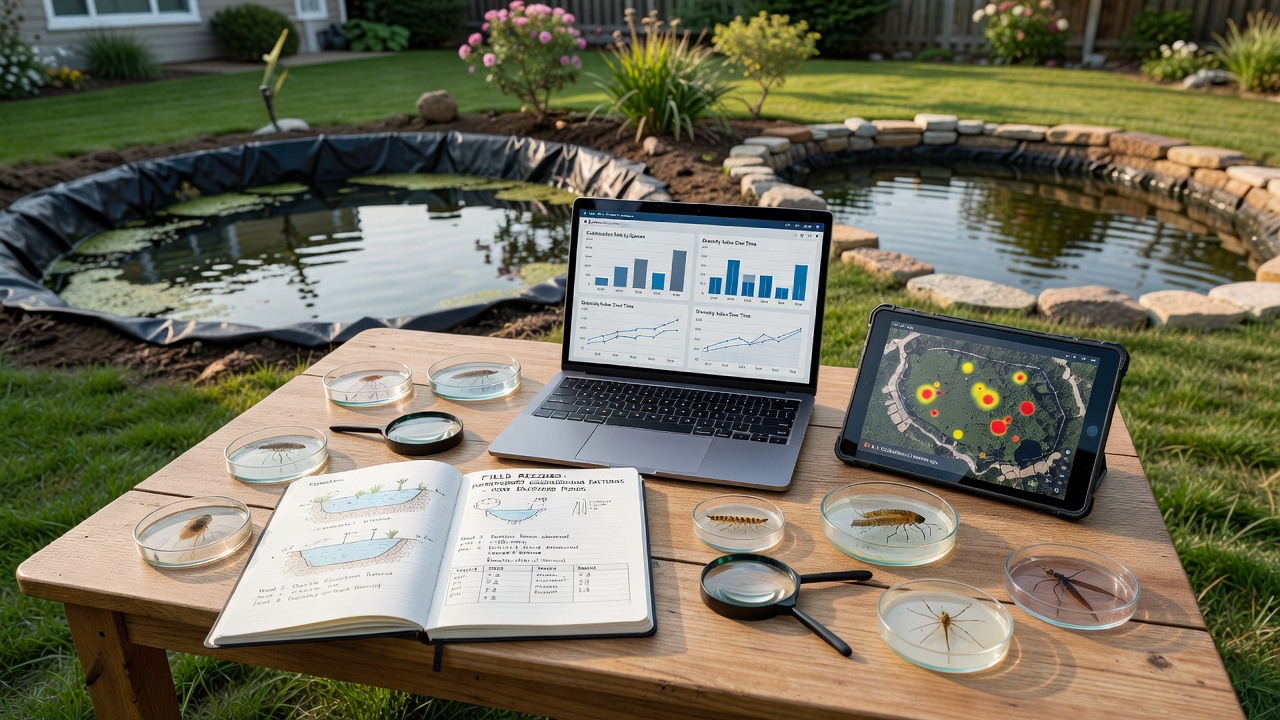
Analysis of paired records shows that ponds with added marginal plants host higher early diversity because stems provide attachment sites and refuge from predation, while bare-liner installations exhibit slower increases until natural detritus accumulates. Nutrient measurements indicate that total phosphorus levels above 0.05 mg/L correlate with faster cladoceran population growth, yet excessive inputs from lawn runoff can favor only a few tolerant taxa and reduce overall richness according to long-term monitoring summaries published by the U.S. Environmental Protection Agency. Temperature records reveal that colonization proceeds faster in ponds reaching 18 °C by late spring, whereas shaded sites maintain lower invertebrate densities through midsummer. October 2026 data releases from ongoing projects in British Columbia confirm these temperature relationships hold across an additional 35 new ponds monitored since 2023, with peak midge emergence shifted two weeks later than average due to cooler September conditions.
Comparison with Regional Datasets
Researchers compare backyard pond records against larger constructed wetlands tracked by state agencies and find similar pioneer species lists, although backyard systems reach saturation of available niches more rapidly because of smaller surface areas and higher edge-to-volume ratios. A report compiled by Environment and Climate Change Canada notes that urban ponds in the Greater Toronto Area accumulate 80 percent of expected regional invertebrate families within the first growing season when connected to stormwater networks, and comparable patterns appear in field sheets from Australian constructed water features where chironomids and ceratopogonids dominate initial samples. Seasonal shifts documented in the records show spring arrivals dominated by overwintering adults while autumn brings increased numbers of dispersing juveniles seeking overwintering sites before ice cover forms.
Conclusion
Field records spanning multiple continents demonstrate repeatable colonization sequences driven by life-history traits, proximity to source populations, and local water quality parameters, and these datasets continue to expand as new backyard ponds are added each year. Continued compilation of arrival dates alongside environmental measurements allows researchers to refine predictive models that forecast community composition based on installation timing and surrounding landscape features, while October 2026 updates underscore the value of sustained monitoring programs that capture interannual variation in colonization dynamics.